When it comes to coverage, not all paint colors are created equally. All colors have varying degrees of opacity or transparency, which determines the way it reflects light.
Opaque colors tend to obscure the surface color, while transparent colors tend to allow the surface to show through. Bright colors, including yellows, oranges, reds and primary colors, tend to be more transparent in nature. Using a gray or tinted (to the paint color) primer with these colors helps to create an ideal balance of light absorption and reflection, which in turn provides superior hide for these bold, vivid hues.
ECOS colors that benefit from a gray or tinted primer are indicated in our color library (Fan Deck View) with a roller icon
Priming is recommended to enhance coverage, adhesion and durability of the topcoat. Surfaces that should be primed include:
- All unpainted surfaces (such as bare wood, plaster or new drywall)
- Patched or repaired areas
- Paneling
- Stained surfaces
- Surfaces painted with oil-based paint
- Surfaces that will have an extreme color change (light to dark or dark to light)
After priming interior walls or other surfaces, painting should be done within twelve hours for best adhesion.
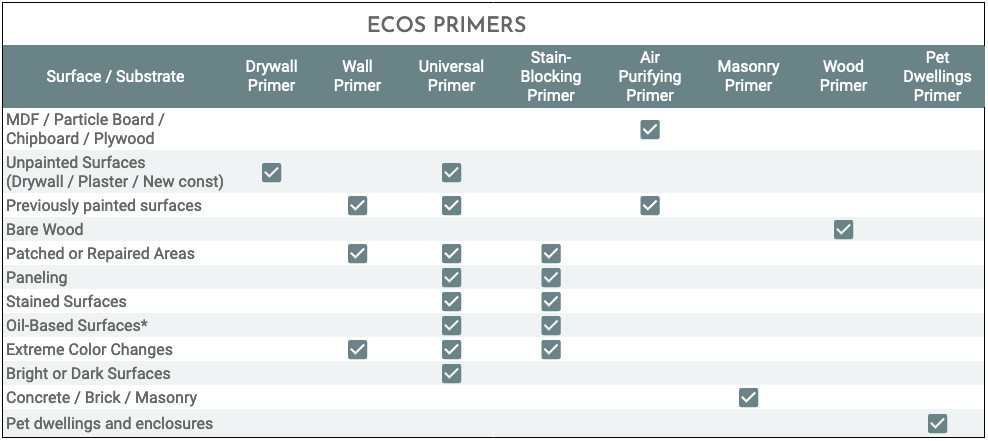
* See our “Painting over oil-based paint” Pro Tip for more information.
Note: Air Purifying Primer should only be used over bare MDF or similar materials. Air Purifying Primer is designed to absorb VOCs as they off-gas from the substrate beneath.
For best results, refer to the product-specific Application Instructions on each product page.